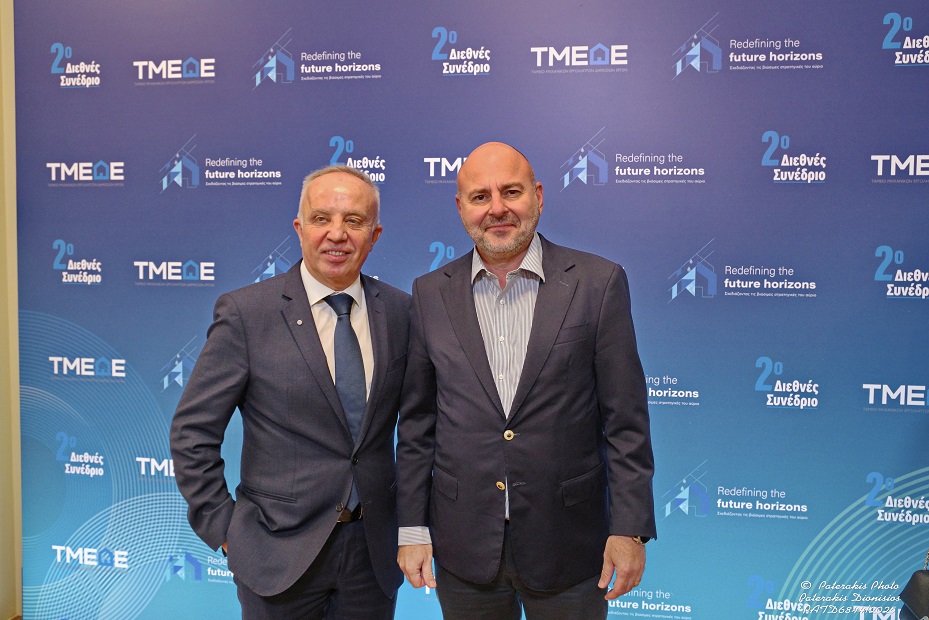
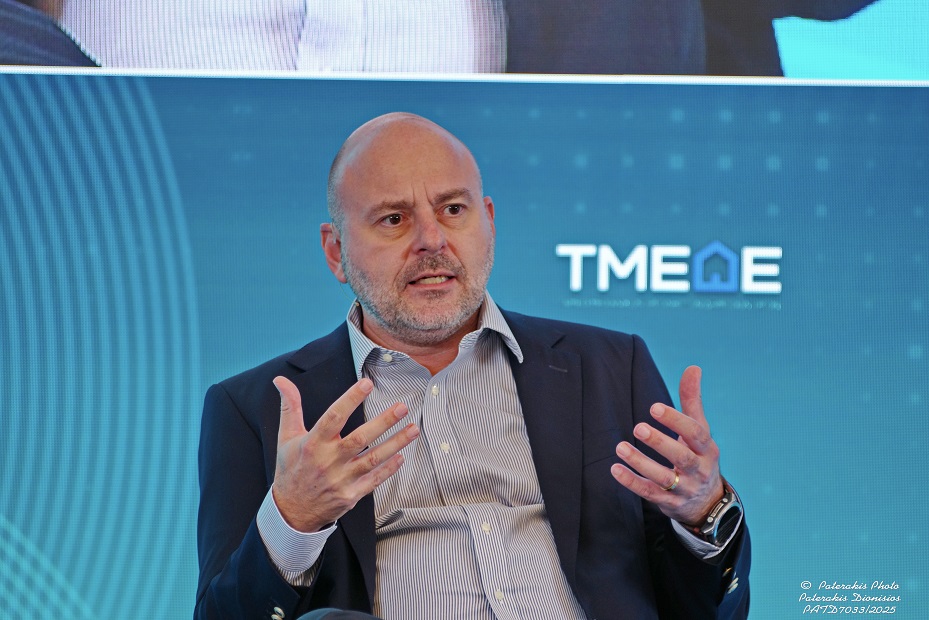
Giorgos (George) Stasinos: Speed in Planning and Adherence to Timelines for Addressing Pressing Challenges
Giorgos Stasinos, President of the Technical Chamber of Greece (TEE – TCG), referred to the first-ever implementation of comprehensive urban planning in Greece, the development of early flood-risk forecasting systems, the creation of a National Infrastructure Registry for systematic maintenance, and the need for both immediate and long-term interventions to address traffic congestion, during his address at the 2nd International Conference “Redefining the Future Horizons: Designing the Sustainable Strategies of Tomorrow.”
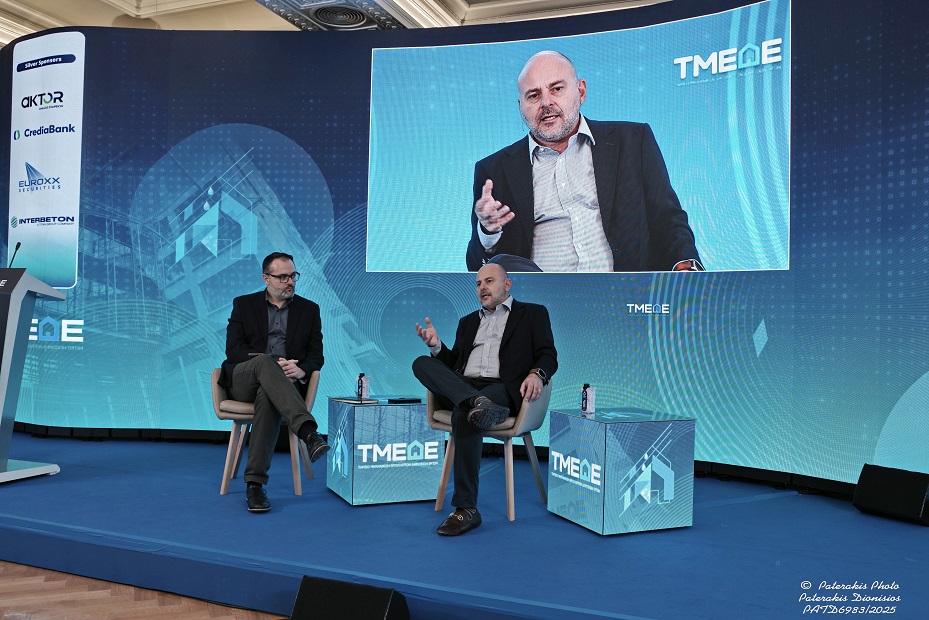
Speaking at the Conference, held on 9–10 December at the building of the Bank of Greece Employees’ Association (SYTE) on Sina Street in Athens, Mr. Stasinos sent a clear message on the urgency of accelerating planning processes and adhering strictly to timelines, in order to effectively address increasingly pressing challenges.
The Conference was held under the auspices of the Bank of Greece and the Technical Chamber of Greece, underscoring its strong institutional standing and the elevated level of dialogue fostered by TMEDE in the critical field of sustainable development.
Referring to the ongoing urban planning reform, Mr. Stasinos estimated that 70–80% of the relevant studies will be completed by May, highlighting the unprecedented scale of the undertaking. Approximately 200 Local and Special Urban Plans are expected to be completed within three years — a process that, at previous administrative speeds, would have required nearly a century.
He stressed that, following the completion of the studies, further processing by committees of the Ministry of Environment and Energy will be required, before submission to the Council of State (CoS) for approval, underlining the need for adequate preparation to absorb and process this volume of planning work.
Reduced Construction Activity in Mykonos and Santorini
Addressing questions on Mykonos and Santorini, Mr. Stasinos noted that studies for both islands have been completed and will constitute the first Special Urban Plans to be submitted to the Council of State within 2026.
Using Mykonos as an example, he explained that buildable areas are being reduced by 20–40%, as certain zones are designated as protected, while minimum plot size requirements are being increased — to 8 hectares in general and to 30 hectares for hotel developments.
In Santorini, minimum plot sizes are set even higher. Mr. Stasinos described the plan for Santorini as “overly conservative,” as it leaves very limited scope for new tourist developments. Nevertheless, he stressed that construction activity for tourism facilities on both islands is currently effectively frozen, making the advancement of planning imperative.
In Santorini, minimum plot sizes are set even higher. Mr. Stasinos described the plan for Santorini as “overly conservative,” as it leaves very limited scope for new tourist developments. Nevertheless, he stressed that construction activity for tourism facilities on both islands is currently effectively frozen, making the advancement of planning imperative.
He also observed that “much depends on the priorities of each mayor,” adding that while political pressure often interferes with what should be a strictly scientific process, the absence of urban planning is a far worse outcome.
Mr. Stasinos expressed cautious optimism regarding broader developments in construction regulation, referring to the planned revision of the Building Code in 2026, to be enacted via Presidential Decree and approved by the Council of State, in order to avoid constitutional challenges. He also welcomed the planned transfer of Urban Planning Offices (YDOM) to the Hellenic Cadastre, while criticising cases in which different officials within the same planning authority apply the law inconsistently.
He strongly condemned practices whereby mayors instruct services not to apply existing legislation, stating unequivocally that “a mayor cannot act unlawfully with impunity.”
Early Flood-Risk Forecasting Is Essential
During a discussion with journalist Stelios Morfidis on “From Planning Resilient Infrastructure to Implementation: Modern Standards, Digitalisation and New Technologies,” Mr. Stasinos placed particular emphasis on early flood-risk forecasting, in light of recent extreme weather events.
He stressed that floods entail the highest level of political responsibility, as they can often be anticipated — unlike earthquakes — highlighting the urgent need for early-warning systems, citizen alerts, and precise identification of the most vulnerable areas.
Mr. Stasinos referred to a relevant project proposed by TEE to the State, estimating that it could be completed within the next three years. He recalled that master plans must be finalised and necessary works implemented, noting critically that in Greece, projects are often selected based on study readiness rather than actual need, leading to misaligned priorities.
Immediate and Long-Term Measures Needed to Address Traffic Congestion
Referring to recent heavy rainfall and the resulting paralysis of transport in Attica, Mr. Stasinos stressed the need for both short-term relief measures and long-term infrastructure projects.
He reiterated proposals to restrict freight traffic during peak morning hours (7:00–10:00), initially, with a similar restriction during afternoon peak hours (16:00–19:00). Regarding major infrastructure projects, he emphasised the urgency of advancing the extension of Kymi Avenue, the Elefsina–Thebes road axis, and the connection between the Hymettus Ring Road and Vouliagmenis Avenue.
While underlining the importance of public transport in addressing congestion, Mr. Stasinos expressed scepticism regarding the delivery timeline of Metro Line 4, stating that it is unlikely to be completed even by 2032, due to the absence of accountability when project timelines are not respected — with citizens ultimately bearing the consequences.
Claiming European Funding for Infrastructure Maintenance
Mr. Stasinos also focused on the ageing state of infrastructure, warning that even advanced economies face severe maintenance challenges — an issue that Greece will inevitably confront.
He referred to the National Infrastructure Registry, developed by TEE, which serves as a central platform for recording all infrastructure assets and their condition. He acknowledged the reluctance of local authorities to input data, primarily due to the lack of funding for maintenance works.
Reiterating the need to secure European funding dedicated to infrastructure maintenance, Mr. Stasinos also proposed innovative tools, such as extending concession periods in exchange for maintenance obligations by concessionaires. He further suggested that introducing personal accountability mechanisms for infrastructure managers could significantly improve data reporting.
As an example, he cited the mandatory pre-seismic inspection of public buildings, implemented by TEE, under which approximately 33,000 buildings were inspected within 18 months, compared to just 100 inspections carried out over the previous 50 years.
Conference Support
Silver Sponsors:
AKTOR Group, CREDIA BANK, EUROXX Securities S.A., INTERBETON
AKTOR Group, CREDIA BANK, EUROXX Securities S.A., INTERBETON
Bronze Sponsors:
IOLCUS, Joltie, MESOGEIOS S.A.
IOLCUS, Joltie, MESOGEIOS S.A.
Supporters:
ALUMIL, ARKITON S.A., AS BUILD ATE, COSMOS AEBE, EFG Eurobank, Eldon’s Hellas, ETBA, Eurolamp ABEE, Grant Thornton, Green Edge, Premia Properties, Prudential, RENEL IKE, Hellenic Hydroconstruction S.A., ELTE, EYATH, EYDAP, Kokkinis Construction Technology S.A., Michail M. Tsontos S.A., NAMA S.A., Plethron Construction ATE, Polytechnical Redevelopment IKE, STASY, T&T Constructions S.A., TEKAL ATE
ALUMIL, ARKITON S.A., AS BUILD ATE, COSMOS AEBE, EFG Eurobank, Eldon’s Hellas, ETBA, Eurolamp ABEE, Grant Thornton, Green Edge, Premia Properties, Prudential, RENEL IKE, Hellenic Hydroconstruction S.A., ELTE, EYATH, EYDAP, Kokkinis Construction Technology S.A., Michail M. Tsontos S.A., NAMA S.A., Plethron Construction ATE, Polytechnical Redevelopment IKE, STASY, T&T Constructions S.A., TEKAL ATE
Media Partners:
ERT (Hellenic Broadcasting Corporation), Athens News Agency – Macedonian Press Agency
ERT (Hellenic Broadcasting Corporation), Athens News Agency – Macedonian Press Agency
Photo Gallery