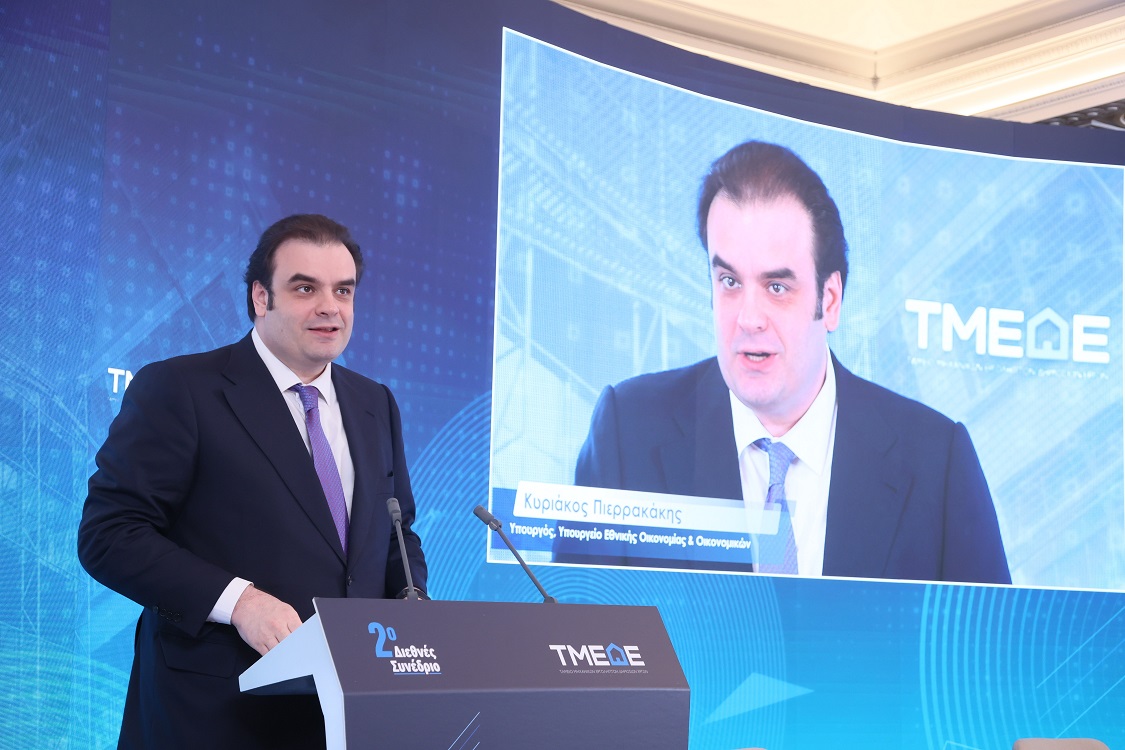
Kyriakos Pierrakakis: “Money is not simply available; it is created. Growth emerges from sound strategies.”
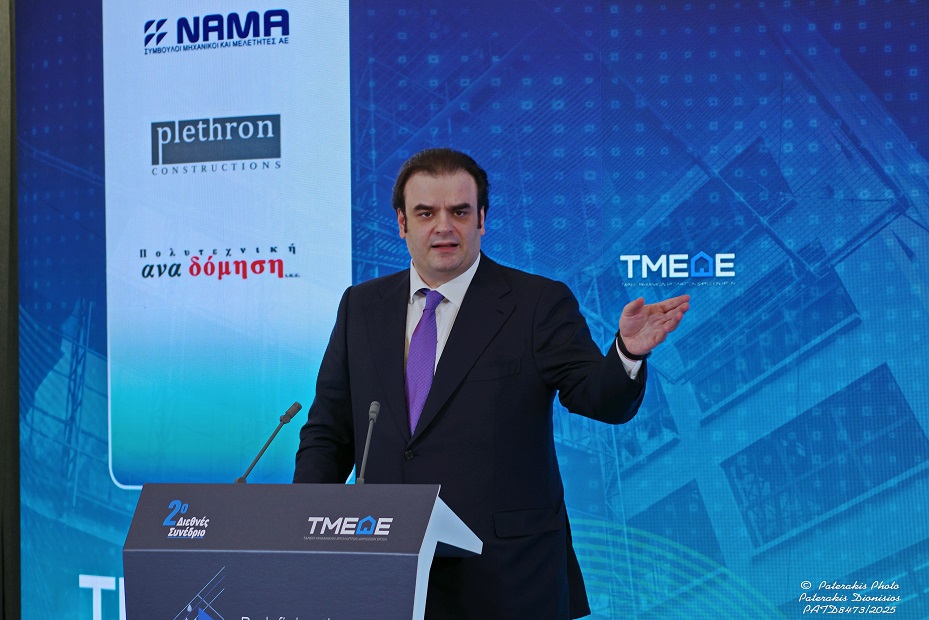
Greece’s Minister of Economy and Finance, Kyriakos Pierrakakis, during his opening address at the second day of the 2nd International Conference TMEDE “Redefining the Future Horizons: Designing Tomorrow’s Sustainable Strategies,” highlighted the strategic priorities that drive sustainable growth and the reforms transforming the country’s productive model—enhancing fiscal performance and shaping the future beyond the Recovery and Resilience Facility.
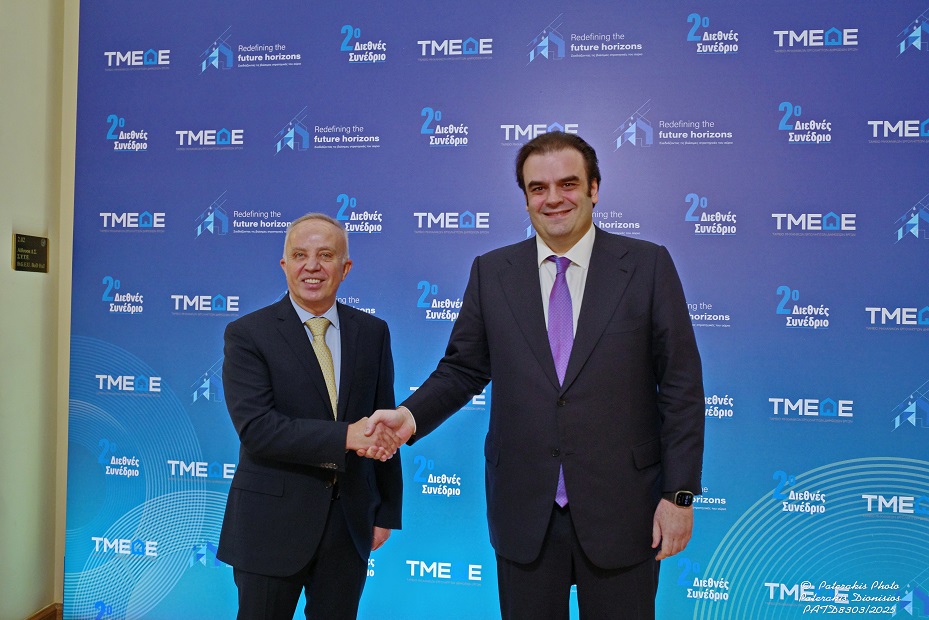
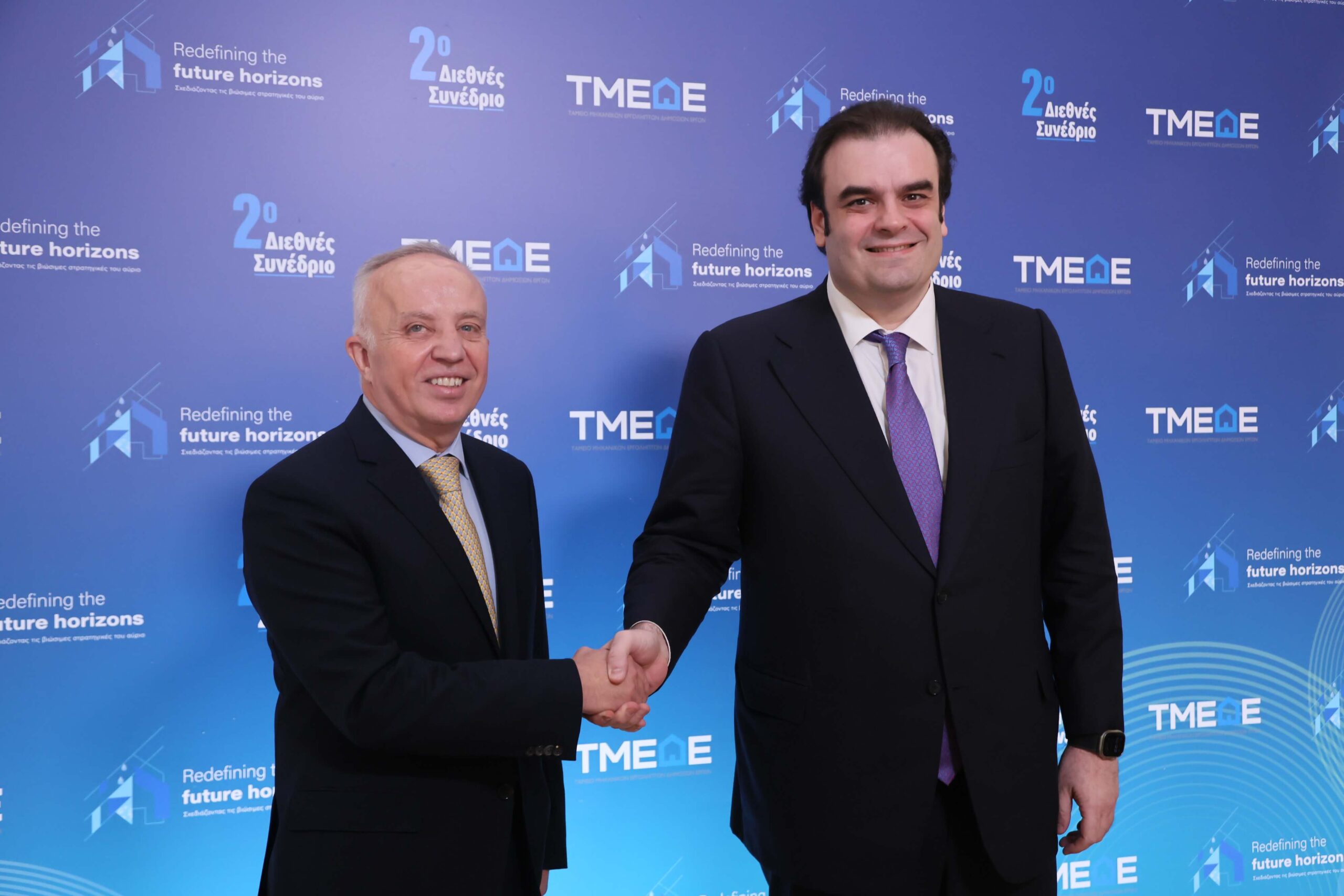
The conference was organized by the Engineers and Public Works Contractors Fund (EPWCF-TMEDE) and held on December 9–10 at the Bank of Greece Employees’ Association building in Athens. The event took place under the auspices of the Bank of Greece and the Technical Chamber of Greece, underscoring its high institutional significance and the high-level dialogue fostered by TMEDE in the critical field of sustainable development.
Fiscal Performance and Debt Outlook
The Minister emphasized the government’s strategic goal of attracting investment and described the current economic environment as a significant transformation that has become well-established in recent years.
“At the moment, Greece ranks among the European countries with the strongest fiscal performance”
Minister Kyriakos Pierrakakis highlighted the rapid decline in public debt, noting that projections indicate the debt-to-GDP ratio will fall below 120% by the end of the decade.
“Our goal is to ensure that Greece will soon no longer be the most indebted country in Europe in terms of debt-to-GDP”
The Minister described this objective as both attainable and socially significant.
“We have achieved fiscal consolidation while also delivering a major digital transformation”
Minister Kyriakos Pierrakakis said, adding that the two processes reinforce each other and citing the fight against tax evasion as a key example.
The Virtuous Cycle of Reform
Minister Kyriakos Pierrakakis also referred to what he described as a “path of large-scale reforms” that has created a virtuous cycle. He said this trajectory rests on three interconnected pillars: fiscal consolidation, a stable banking system, and structural reforms. On the latter, he noted that more than 100 reforms have been implemented across policy areas over the past six years, adding that
“digital transformation is the fundamental driver of growth for building a resilient economy.”
“We are on a positive trajectory”
Minister Kyriakos Pierrakakis stated that the high debt accumulated before the financial crisis was due to Greece’s previous productive model, which is currently undergoing changes that are not yet complete.
He noted that the investment-to-GDP ratio has increased from 11% in 2019 to 17.7%, although it still falls short of the European average of 21%.
Additionally, exports now represent 42% of Greece’s GDP—double the level seen in 2008—but remain below the EU average of 51%.
“This is where our focus lies: bringing more investment into the economy”
The Post-Recovery and Resilience Facility Era
Greece’s Minister of Economy and Finance, Kyriakos Pierrakakis, also referred to the ongoing discussion surrounding the post-Recovery and Resilience Facility (RRF) era, acknowledging the key role the Facility played in financing projects that previously lacked funding.
“We managed to cover what was necessary and move into the sphere of what is desirable”
He emphasized the RRF’s shift toward linking funding allocations to structural reforms and the scale of their economic impact, noting that the multiplier effects of these investments are expected to extend well beyond the RRF period.
“Money is not simply available; it is created. Growth emerges from sound strategies—and from leverage, including the broader European context,”
The Minister underscored the importance of assessing the economic impact of the co‑financed program funds expected to enter the economy in the coming years, noting that government policy choices play a decisive role. As an example, he referred to the measures announced by the Prime Minister at the Thessaloniki International Fair on demographic policy and tax relief:
“Before these measures, the growth forecast for 2026 stood at 1.8%. Following their announcement, the projection rose to 2.4%”
he added.
Minister Pierrakakis also referred to Greece’s objective of pursuing cross-border mergers and acquisitions, citing the Draghi report, which notes that EU member states often operate as if “invisible tariffs” exist between them and calls for their removal.
In this context, the Minister highlighted Euronext’s acquisition of the Athens Stock Exchange, which integrates Greece into a broader network and expands liquidity opportunities. He also pointed to cross-border investments in the banking sector as key drivers of growth.
Summarizing his stance, Minister Pierrakakis stressed that the overarching objective remains the continued transformation of Greece’s productive model toward greater outward orientation, the effective leveraging of funding in the spirit of the RRF—linking every euro to structural reforms—and securing a substantial increase in investment inflows.
“The more obstacles we eliminate from the Greek economy and the more we uphold economic and political stability, the more robust the virtuous cycle becomes for attracting additional investment”
“This represents a far more comprehensive and stable foundation than any alternative previously available to us. The difference today is that we are demonstrating -both to ourselves and to the international community- that we can deliver it”
In the end, Minister Kyriakos Pierrakakis acknowledged that “citizens still face hardships, challenges remain unmet, and households and businesses require support; However, the transformation underway is significant compared to what came before. We must therefore stay the course, and we will achieve much better outcomes.”
—
Detailed program and participant information is available at:
https://future-horizons.gr/en/home/
The conference was supported by:
Silver Sponsors:
AKTOR Group of Companies, Credia Bank, Euroxx Securities SA, Interbeton
Bronze Sponsors:
Iolcus, Joltie, Mediterranean SA
Supporters:
Alumil, Arkiton AE, AS Build ATE, Cosmos AEBE, EFG Eurobank, Eldon’s Hellas EPE, ETBA, Eurolamp ABEE, Grant Thornton, Green Edge, Premia Properties, Prudential, Renel IKE, Hellenic Hydroconstruction SA, ELTE EPE, EYATH, EYDAP, Kokkinis Construction Technology SA, Michael M. Tsontos SA, NAMA SA, Plethon Construction ATE, Polytechnic Reconstruction IKE, S. STASY, T&T Constructions SA, Tekal ATE
Media Sponsors:
ERT, Athens News Agency – Macedonian News Agency
Gallery